
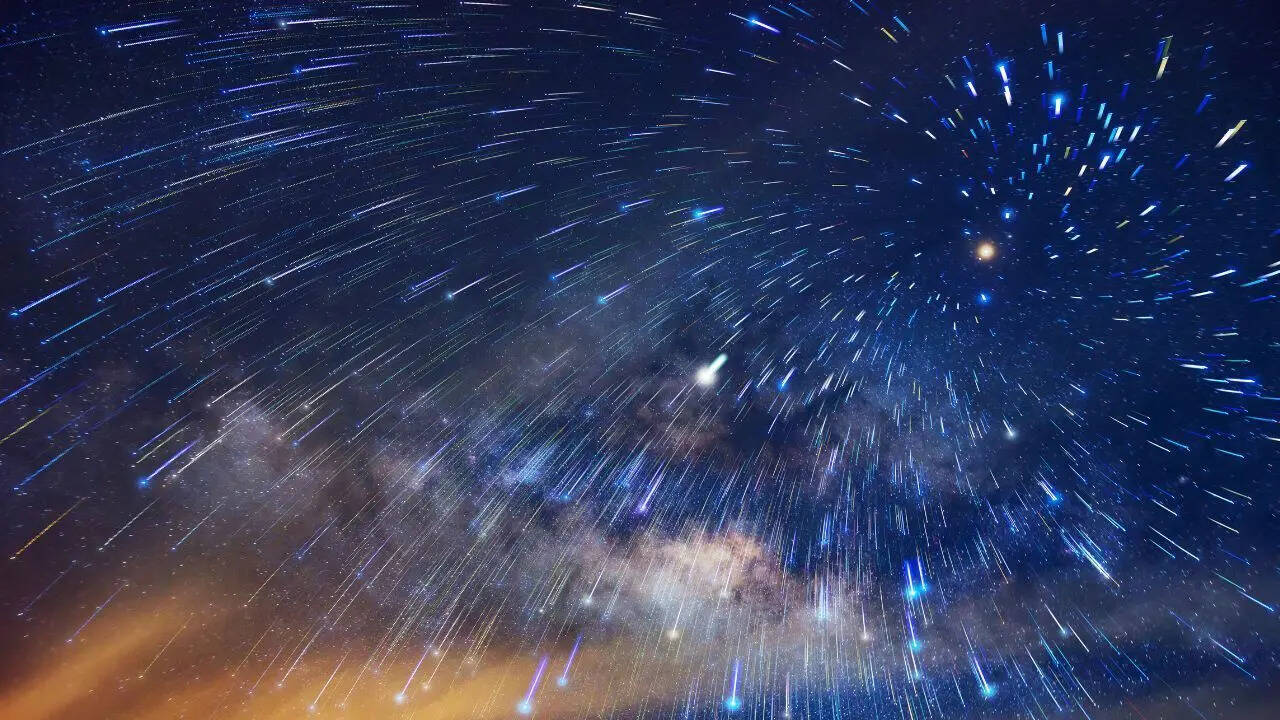
Are you someone who has been an avid stargazer since childhood, and are you looking for another interesting reason to look up this May? Then we have a fair list of celestial events that will satiate your love for stars and meteors and the most beautiful blue moon! Read on to know more about these night sky sightings!The Eta Aquariids face a bright obstacleThe month kicks off with the peak of the Eta Aquariids meteor shower, caused by Earth passing through the dust trail of Halley’s Comet. Usually a highlight for stargazers, this year’s show faces a major challenge: the Moon. Because the shower peaks just days after a full moon, the lunar glare will drown out all but the brightest fireballs.Astronomer Tanya Hill from the Melbourne Planetarium notes that while you might typically see 20 to 30 meteors an hour before dawn, the moonlight will likely drop that number to just 5 or 10. If you are determined to see them, your best bet is the hour or two before sunrise on May 6 and 7, when the “radiant point” in the constellation Aquarius is highest in the sky.A green comet for binocular usersIf the meteors prove too faint, keep an eye out for Comet C/2025 R3 PanSTARRS. Having just swung around the Sun in late April, this blue-green comet is currently visible in the western sky just after sunset. While it is at a magnitude of 5.2—technically visible to the naked eye under very dark skies—experts recommend using binoculars to get a clear view.
The dance of Venus and JupiterTwo of our solar system’s brightest planets are putting on a show in the evening sky. Venus is currently shining brilliantly in the west after sunset, while Jupiter sits higher in the northwest. Over the next six weeks, the two will appear to draw closer together, eventually swinging past each other around June 9–10. This approach offers a great opportunity to compare their brightness, with Venus far outshining the “King of Planets.“Ending the month with a “Blue” micromoonMay is unique this year because it features two full moons: the “Flower Moon” on May 2 and a second full moon on May 31. This second occurrence is known as a “blue moon,” a rare event that happens roughly every two and a half years. Interestingly, both full moons this month are also “micromoons.” This means they occur while the Moon is near its furthest point from Earth (apogee). While they may technically be smaller and slightly dimmer than a “supermoon,” the difference is nearly impossible to detect with the naked eye.